- +60 18 579 2342
- [email protected]
- Mon - Fri: 9:00am - 8:00pm

Condoms play an essential role in safer sex by helping reduce the risk of sexually transmitted infections, also known as STIs, and unintended pregnancies. But like many health and personal care products, condoms have an expiration date. Once they expire, they may no longer provide the same level of protection, which can increase the risk of breakage, leakage, or reduced effectiveness.
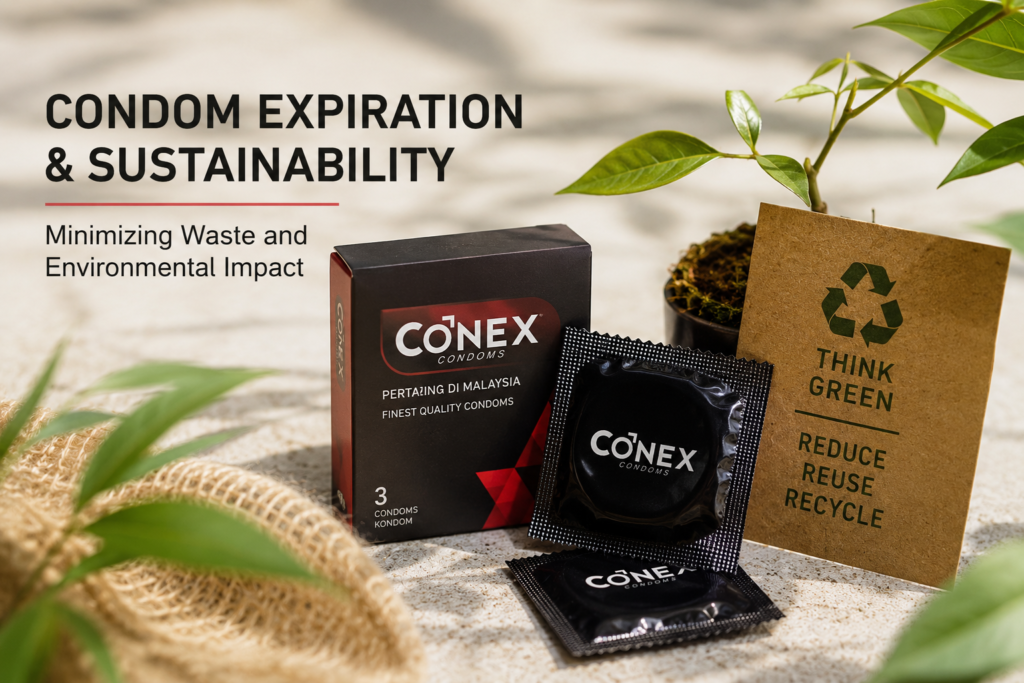
At Conex Condoms, we believe protection should go beyond performance. It should also support responsible choices, safer use, and better awareness of environmental impact. Understanding condom expiration and proper disposal is a simple but powerful step toward protecting both personal health and the planet.
Every condom has an expiration date printed on the packaging or individual wrapper. This date shows how long the condom is expected to remain safe and effective when stored correctly.
Over time, condom materials can weaken, especially if exposed to heat, sunlight, moisture, or friction. Using an expired condom may increase the chance of failure, which is why it is important to check the date before use. For the best protection, always use condoms that are within their expiry period and stored in a cool, dry place.
Expired condoms may look normal, but the material can become weaker over time. This can affect comfort, reliability, and protection during use.
Before using any condom, always check:
If a condom is expired or the packaging looks damaged, it should not be used. Choosing a fresh, properly stored condom helps support safer, more confident protection.
Expired condoms create waste when they are thrown away, especially if they are disposed of incorrectly. Many condoms are made from latex, while others are made from synthetic materials such as polyurethane or polyisoprene. Packaging, wrappers, lubricants, and added ingredients can also affect how easily these products break down after disposal.
One of the most important disposal rules is simple: do not flush condoms down the toilet. Flushing condoms can block plumbing, affect wastewater systems, and contribute to environmental pollution. The better option is to wrap the condom and place it in a waste bin.
Responsible disposal helps reduce unnecessary harm to waterways, drainage systems, and the wider environment.
Reducing condom waste does not mean compromising on safety. It means making better choices before, during, and after use.
Before purchasing condoms, check the expiry date on the box whenever possible. Choosing products with a longer shelf life helps reduce the chance of condoms expiring before they are used.
Good storage helps condoms last until their expiration date. Keep condoms in a cool, dry place away from sunlight, heat, sharp objects, and pressure. Avoid leaving condoms for long periods in wallets, cars, or hot places, as this can damage the material.
Buying too many condoms at once may lead to unused products expiring. Choose an amount that suits your needs so you can reduce waste while still staying prepared.
Used or expired condoms should be wrapped in tissue or paper and placed in a waste bin. They should not be flushed, recycled, or thrown outdoors.
Consumers can support brands that care about product quality, safe packaging, responsible manufacturing, and sustainability awareness. Small choices can create a larger positive impact when more people make them consistently.
Sustainability in sexual wellness is becoming more important as consumers look for safer and more responsible products. While condoms are single-use products for hygiene and safety reasons, there are still ways to make more eco-conscious choices.
Some possible improvements include:
The goal is not to reuse condoms or take risks with expired products. The goal is to make safe, informed, and responsible choices from purchase to disposal.
Sustainability starts with awareness. By checking expiration dates, storing condoms correctly, using each condom only once, and disposing of them properly, consumers can reduce waste while maintaining reliable protection.
A condom is a small product, but it carries an important purpose. When used correctly, it supports safer sex. When disposed of responsibly, it also helps reduce unnecessary environmental harm.
Condom expiration is more than just a date on the package. It is a reminder to prioritize safety, quality, and responsibility. Expired condoms should not be used for protection, but they should also be disposed of properly to help minimize waste and environmental impact.
At Conex Condoms, we are committed to supporting confidence, comfort, and responsible protection. By making smart choices, consumers can protect themselves, their partners, and the planet.
Safer protection starts with awareness. Smarter sustainability starts with responsibility.